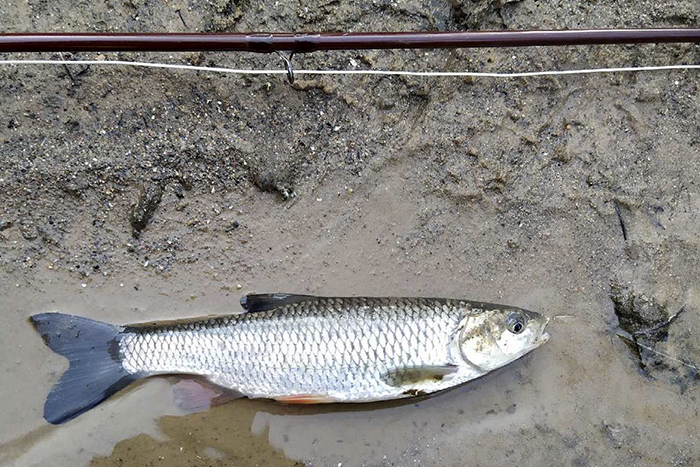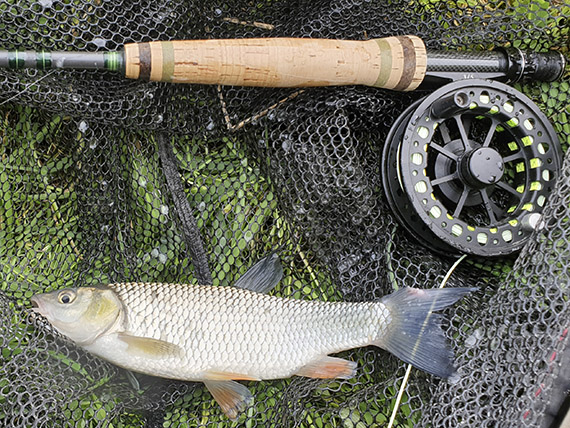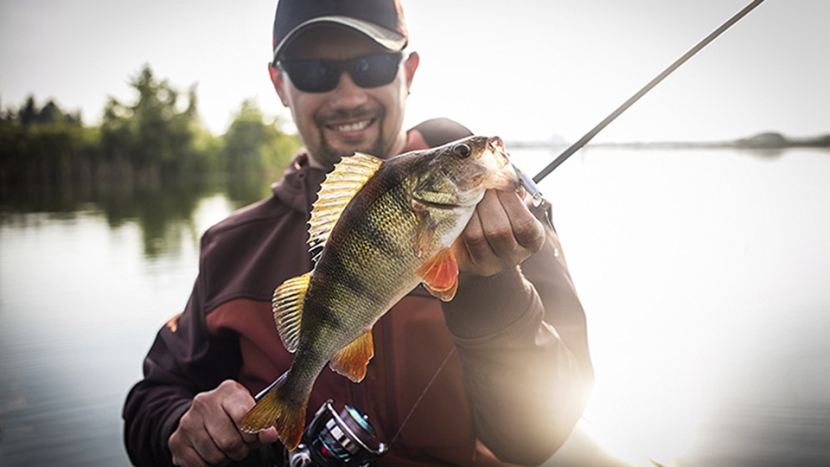
Welcome to France! And especially to the South of Paris where we have some wonderful angling spots just at 25 km from the capital city. You can get here easily by car or by train, and spend a good time on the borders of our river Yvette or our lakes.
How does it work?
A fishing license is mandatory:
To access fishing areas
Fishing rights (banks, shores) belong either to the State (rivers, navigable canals) or to private landowners (rivers, lakes, ponds), from whom authorized fishing associations rent these rights to allow anglers to practice their hobby. Part of the license fee therefore covers this “rental.”
To monitor, maintain, and protect environments and species
Thanks to the fishing license, authorized fishing and aquatic environment protection associations, along with departmental fishing federations, can carry out public-interest missions assigned to them by law (maintenance, management, restoration of rivers, etc.).
To inform the public and support local activities
The fishing license ensures the operation of an information, activity, and monitoring network covering all of France.
What the fishing license funds
The total cost of a fishing license includes 3 components:
• An Aquatic Environment Fishing Contribution (CPMA). It is managed by the national federation (FNPF), which redistributes it almost entirely to the associative fishing network to support its structure and actions.
• Statutory Contributions. These are specific to each departmental federation and each local association, which use them to fund operations and projects. You become an active member of the association that you adhere to.
• The Aquatic Environment Fee (RMA). It is transferred to the Water Agency responsible for the department where the license was purchased. As part of water policy, the Agencies financially support actions carried out by the recreational fishing association network.
Where can I get a license?
The fishing license is available online:
• Directly from home, on the website www.cartedepeche.fr
• In associations or from authorized dealers displaying “Ici, cartes de pêche” (“Fishing licenses available here”) (fishing tackle shops, newsagents, cafés, local shops). They will provide information on fishing locations and specific local fishing regulations by giving you a guide published by the departmental federation.
A license for every type of fishing
To allow you to enjoy your hobby according to your preferences or simply your schedule, the fishing association network offers a range of licenses to meet your needs:
• For adults: "Adult" license, "Discovery Woman" license
• For young people: "Minor" license (ages 12–18), "Discovery Under-12" license
• For flexible fishing: weekly license, daily license
For more information about each license, visit www.cartedepeche.fr
A few rules
Why regulate fishing?
Fishing is the act of taking possession of a wild fish, which belongs to no one.
It applies to all places where fish are expected to move. That is: all rivers, canals, streams, and bodies of water, except those where wild fish cannot pass.
It concerns fish but also crustaceans and frogs, as well as their spawn.
Regulations exist to supervise fishing so that it does not endanger the resource. Their purpose is, on the one hand, to preserve aquatic environments and, on the other, to protect fish populations, which are of general interest. They therefore frame fishing activities in order to allow fish to be born, live, and grow until their first reproduction, and they set rules aimed at ensuring suitable environmental conditions for fish.
Fishing enforcement
Every angler must comply with freshwater fishing regulations (closed seasons and times, prohibited fishing methods, legal catch sizes, authorized catch numbers, etc.), under penalty of criminal sanctions provided for by the Environmental Code. These are mainly 3rd‑class fines punishable by a penalty of up to 450 euros (Article L.436‑40 of the Environmental Code).
The search for and recording of fishing‑related offenses are carried out by:
• Public officers authorized by the Environmental Code, empowered to intervene on both public and private waterways: AFB officers, etc.
• Private sworn fishing wardens commissioned by fishing associations and federations on the stretches where they hold fishing rights.
Who can fish?
Anyone may fish in freshwater if three cumulative conditions are met:
• proof of membership in an approved fishing association
• payment of the fee for the protection of aquatic environments
• permission from the person holding the fishing rights
Anyone holding a valid fishing license for the area meets these three conditions.
Fishing without a license constitutes a triple offense and can result in a fine of 450 euros.
Where can you fish?
• Where the holder of the fishing rights authorizes you: where your AAPPMA holds fishing leases and where reciprocity agreements exist
• In private fishing areas, with the landowner’s consent
• On all national public waterways, using a single fishing line
National rules adapted locally
The fishing rules established at the national level are adapted locally at the departmental level according to specific environmental characteristics, particularly to protect certain emblematic species or unique habitats, through a prefectural fishing decree.
Anglers are therefore encouraged to consult local regulations on the websites of FDAAPPMA, their prefecture, or town hall.
These rules vary mainly depending on the fish category.
Indeed, rivers, lakes, and ponds are divided into two fish categories: Category 1 and Category 2.
• Category 1 is mainly populated by trout, char, grayling, and other salmonids
• Category 2 includes all other rivers, canals, and bodies of water
These classifications, determined by prefectural decree, are known by the AAPPMA, which can provide guidance.
Invasive alien species: release prohibited
Among the species regulated by freshwater fishing enforcement, anglers are prohibited from releasing the following invasive alien species back into the water:
Fish: Grass carp, Topmouth gudgeon, Pumpkinseed, Common catfish, Eastern mosquitofish, Western mosquitofish, Snakehead, Ruffe
Crustaceans: Spiny-cheek crayfish, Virile crayfish, Blue-clawed crayfish, Red swamp crayfish, Signal crayfish, Californian crayfish, Marbled crayfish, Red‑claw crayfish
Amphibians: Bedriaga’s green frog, Balkan green frog
Possession, transport, or sale of invasive alien species alive—particularly all crayfish listed above—is prohibited.
And the other fish?
It is part of every angler’s ethical responsibility to contribute to the regulation of species in general, especially to counter the spread of non‑native species.
Protection of aquatic environments
In addition to rules governing the act of fishing, every person must respect aquatic environments and fish populations.
The following actions are prohibited and sanctioned under the Environmental Code:
• Any intentional or accidental pollution that destroys fish or harms their feeding, reproduction, or food quality: two years’ imprisonment and a fine of 18,000 euros
• Destruction of spawning grounds, nursery areas, or feeding areas for fish populations: 20,000‑euro fine, unless administrative authorization has been granted or emergency work is being carried out
• Introduction (through transfer, stocking, or restocking) of species likely to cause biological imbalance or of species not already present: 9,000‑euro fine
• Introduction into Category 1 waters of pike, perch, zander, and black bass: 9,000‑euro fine
• Stocking or restocking with fish not originating from an approved fish farm
The penalties relating to prohibited fish introductions do not apply in cases where a caught fish is released immediately, unless it is an invasive alien species.